Supermarket shelves
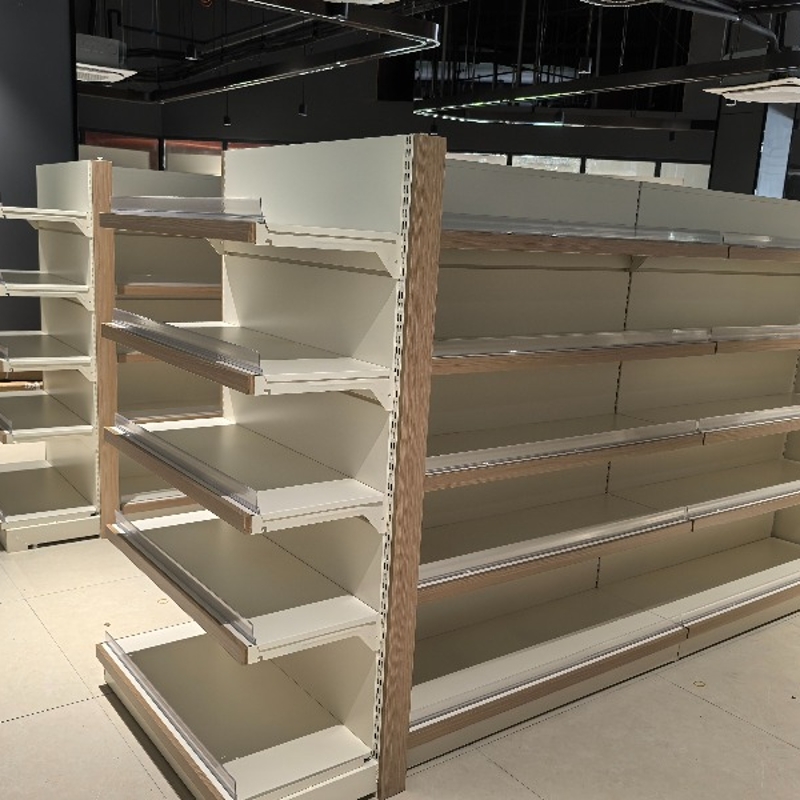
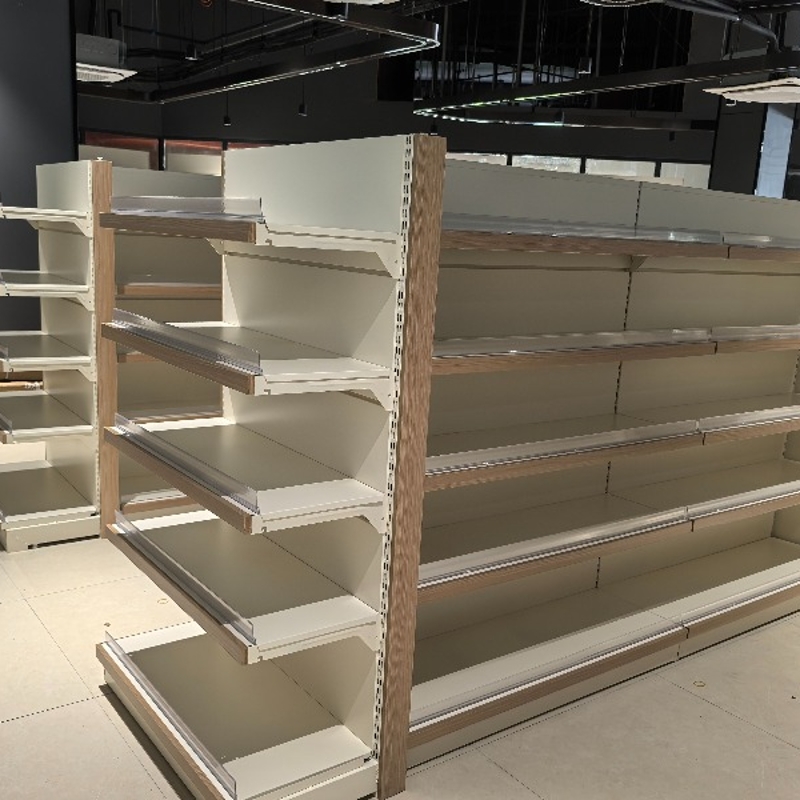
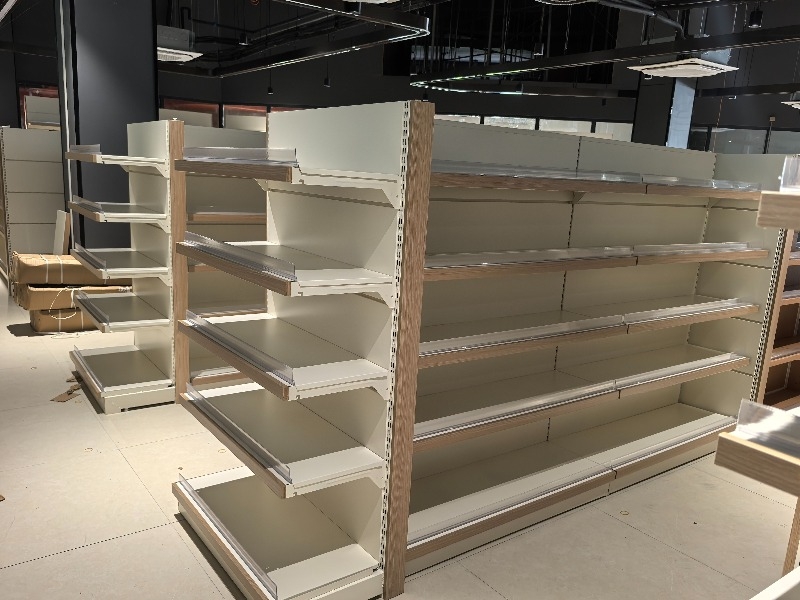
Specifications: 1200 x 500 x 1500 mm; equipped with five tiers.
Supermarket shelving systems are structures specifically designed to display merchandise; they aim to arrange products in an organized manner and maximize the efficiency of retail space, forming the foundation for how stores present goods to customers.
These systems encompass a wide range of types—from freestanding island units to wall-mounted displays—with each design tailored to specific product categories and store layout requirements. Among them, the double-sided island unit is the most widely used; thanks to its versatility and adaptability to various types of merchandise, it holds a dominant position in display systems for supermarkets and convenience stores.
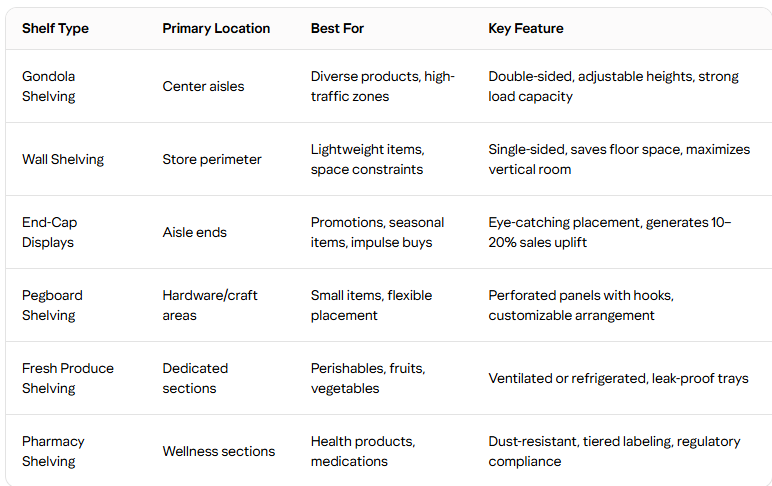
Common Shelf Types and Application Scenarios
Supermarkets employ various shelving configurations to meet diverse product display and operational needs.
Double-sided Gondola Shelving — Freestanding, double-sided units located in central aisles; commonly used for canned goods, dry foods, and packaged items, with adjustable shelf heights to accommodate products of various sizes.
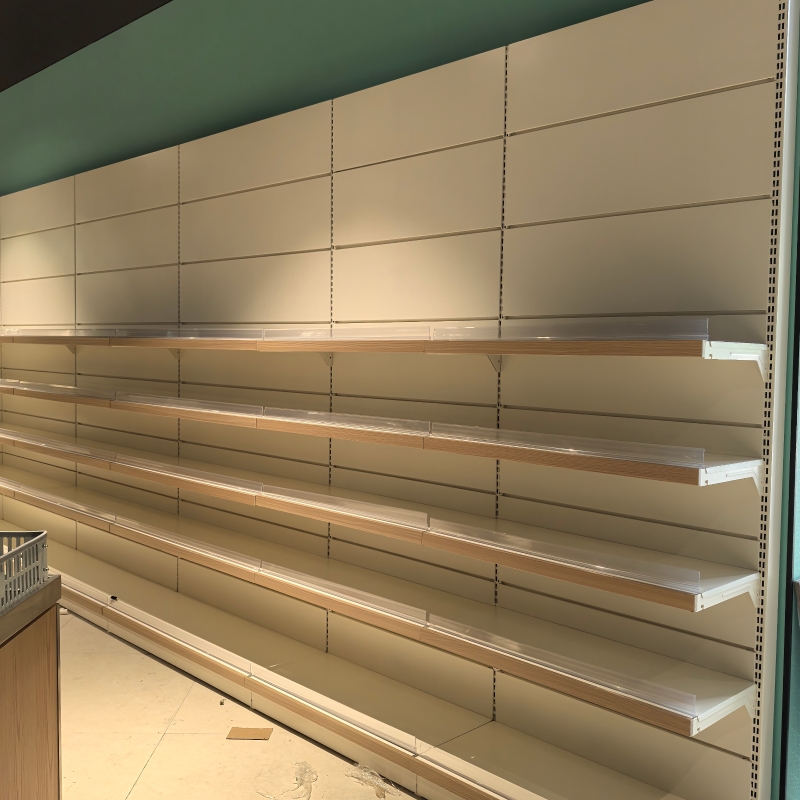
Wall-mounted Shelving — Single-sided units fixed directly to the wall; suitable for lighter items like cleaning supplies and personal care products, maximizing vertical space in narrow aisles.
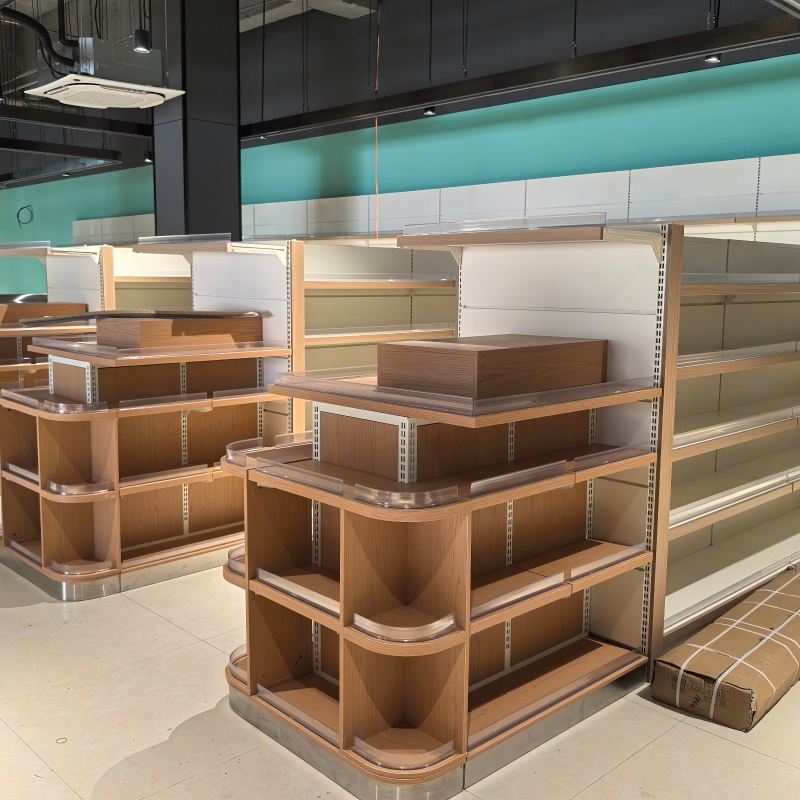
End-cap Displays — Units located at the ends of aisles designed to highlight specific products; frequently used for seasonal items, promotions, or new products, offering high visibility and effectively driving impulse purchases.
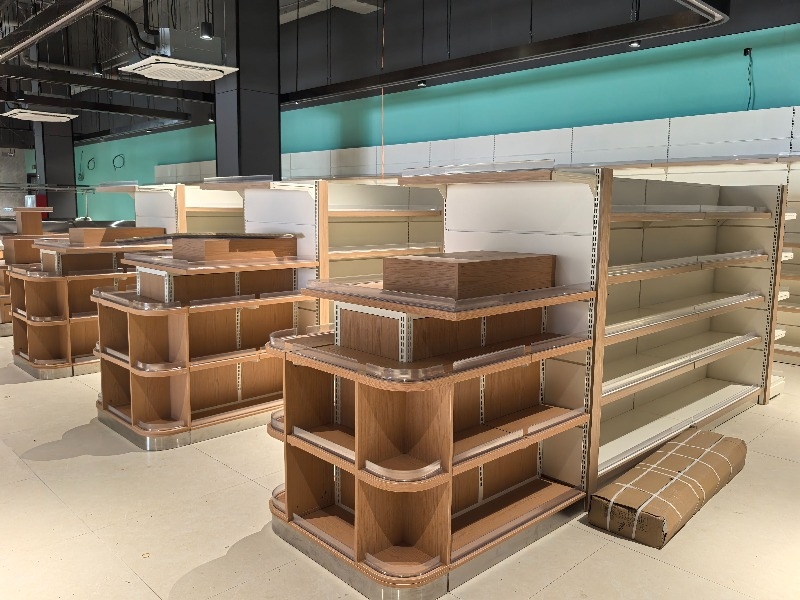
Island Shelving — Freestanding units located in the center of the store; provide 360-degree display space, allowing customers to view products from all angles.
Heavy-duty Shelving — Designed specifically for large or heavy items such as appliances and furniture, offering superior load-bearing capacity.
Material Selection and Operational Considerations
Choosing the right shelving materials and configurations directly impacts durability, aesthetics, and overall store operational performance.
Steel Shelving — The most common type on the market; widely used in settings ranging from warehouses to supermarkets due to low costs, excellent mechanical properties, and ease of fabrication.
Load-bearing Requirements — Heavy-duty gondola units can support loads of up to 1,000 kg per shelf in high-volume areas, whereas lightweight shelving is suitable for fast-moving consumer goods (FMCG) with a load limit of approximately 200 kg.
Modular Flexibility — Modern shelving systems allow for the flexible addition or reconfiguration of units—increasing space utilization by 20%–30%—to adapt to changing product assortments and store layouts. Aesthetic Appeal of Materials — Metal fixtures are sturdy and durable, making them suitable for standard supermarket environments; wooden display units create a warm, inviting atmosphere for organic foods or specialty product sections; while metal wire shelving is ideal for displaying fresh produce and improves airflow.






 English
 USA
USA
 韩国
韩国
 沙特阿拉伯
沙特阿拉伯
 墨西哥
墨西哥
 孟加拉
孟加拉
 葡萄牙
葡萄牙
 西班牙语
西班牙语
 俄罗斯
俄罗斯
 尼日利亚
尼日利亚
 日本
日本
 越南
越南
 巴基斯坦
巴基斯坦
 印尼
印尼